The term “wife beater” is often used casually to describe a sleeveless undershirt or tank top, yet its meaning carries a far heavier implication than many people realize.
What appears to be harmless slang is rooted in language that directly references domestic violence—an issue that affects millions of people worldwide.
Over time, repetition and normalization have dulled the shock of the phrase, allowing it to circulate in fashion, media, and everyday conversation with little reflection on its impact.
This article examines the term “wife beater” beyond its surface-level usage. By exploring its possible origins, cultural reinforcement, and the broader relationship between language and violence, we can better understand why words matter.
Language does more than describe reality; it shapes attitudes, values, and social norms. When violent imagery becomes casual shorthand, it risks minimizing real harm.
Taking a closer look at this phrase is not about policing speech, but about encouraging awareness, responsibility, and more thoughtful communication in a changing cultural landscape.
What Does the Term “Wife Beater” Mean?
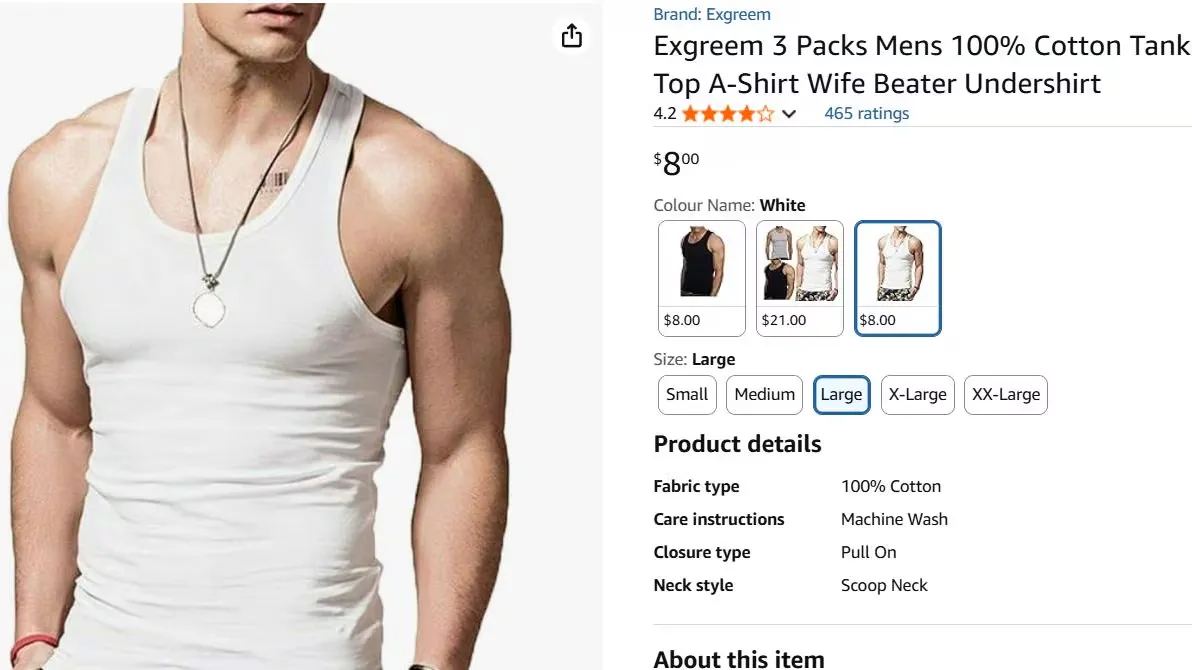
At its most basic level, the term “wife beater” is commonly used as slang for a sleeveless ribbed undershirt, often worn as casual wear or as an undergarment. In fashion and everyday conversation, it has been treated as a shorthand label—one that many people repeat without considering its literal meaning. However, when examined directly, the phrase is unmistakably violent. It describes a man who physically abuses his spouse, embedding an act of domestic violence into a casual clothing reference.
This disconnect between literal meaning and colloquial use is central to the controversy surrounding the term. Over time, slang can become detached from its original implications, especially when repeated frequently in media, retail, and popular culture. For some speakers, the phrase no longer registers as a reference to abuse but as a normalized name for a specific style of shirt. That normalization, however, does not erase the underlying message carried by the words themselves.
Language scholars often point out that slang works by compressing complex ideas into familiar labels. In this case, violence is reduced to a joke, a stereotype, or a visual trope rather than acknowledged as a serious social issue. Context matters, but impact matters too. For survivors of domestic violence, hearing the term can be jarring or painful, regardless of the speaker’s intent.
Understanding what the term means—both literally and culturally—is the first step in evaluating whether its continued use is appropriate. It highlights how easily harmful language can become routine, and why examining everyday words is an essential part of broader cultural awareness.
Origins and Historical Background of the Term
The exact origin of the term “wife beater” is difficult to trace, as there is no single documented moment when it entered common usage. What is clear, however, is that the phrase emerged from a combination of social stereotypes, media imagery, and cultural assumptions rather than from fashion history itself. Linguists and cultural historians generally agree that the term gained traction in the mid-to-late 20th century, particularly in the United States, alongside the rise of visual media.
One widely cited explanation links the phrase to recurring portrayals in film and television. Characters depicted as aggressive, abusive, or volatile—often working-class men—were frequently shown wearing sleeveless undershirts. Over time, this visual shorthand became a stereotype: the image of a violent man in a stained tank top was repeated so often that the clothing itself became associated with the behavior. The term “wife beater” appears to have grown out of this association, transforming a costume choice into a label loaded with meaning.
Another contributing factor is the way slang evolves informally. The phrase likely spread through oral usage rather than print, making its early history harder to document. As it circulated, it was reinforced by humor, shock value, and the tendency of provocative language to stick. Importantly, the garment itself long predated the term and was originally designed as a practical underlayer, often referred to simply as an “A-shirt.”
The lack of a precise origin does not diminish the significance of the term’s implications. Instead, it underscores how casually harmful language can emerge and spread without deliberate intent. The history of the phrase reflects broader patterns in how violence, masculinity, and class-based stereotypes become embedded in everyday speech, often without scrutiny until much later.
Media, Pop Culture, and the Reinforcement of Stereotypes
Media and popular culture have played a significant role in normalizing and reinforcing the term “wife beater.” Film, television, and later music videos frequently relied on visual shorthand to communicate character traits quickly. The sleeveless undershirt became part of a recognizable costume used to signal aggression, volatility, or moral failure—particularly in male characters portrayed as abusive or criminal. These portrayals were often exaggerated, but repetition made the association feel natural rather than constructed.
Classic and contemporary films alike have contributed to this imagery. Characters depicted as violent or unstable were regularly shown wearing the garment in domestic settings, reinforcing a link between the clothing and abusive behavior. Over time, audiences learned to read this visual cue subconsciously. What began as a costume decision evolved into a cultural symbol, and eventually into slang that mirrored the stereotype on screen.
Music and celebrity culture further amplified this effect. In some genres, the tank top was embraced as a symbol of toughness or hyper-masculinity, occasionally accompanied by the casual use of the term itself. Whether used ironically, provocatively, or without reflection, these references helped push the phrase into mainstream vocabulary, especially among younger audiences.
Comedy also played a role in deflecting criticism. Jokes relying on shock value or exaggeration often shielded the term from scrutiny, framing it as harmless humor rather than a reflection of violence. However, humor does not neutralize impact. When media repeatedly presents a violent stereotype as familiar or amusing, it risks desensitizing audiences to the real-world harm behind it.
By understanding how media repetition shapes language and perception, it becomes easier to see why the term persists—and why questioning it is both necessary and overdue.
Domestic Violence and the Real-World Context Behind the Language
Domestic violence is a serious and widespread issue that affects people across all cultures, socioeconomic backgrounds, and age groups. It encompasses physical, emotional, psychological, and financial abuse, most often occurring in private spaces and relationships built on trust. Because of its prevalence and devastating impact, the way society talks about domestic violence—and the language it casually adopts—matters deeply.
When a term like “wife beater” is used as slang, it risks trivializing an act of violence that has profound and lasting consequences for survivors. What may sound like an offhand or outdated expression to some can serve as an uncomfortable reminder for others who have lived through abuse. Language has the power to validate experiences, but it can also unintentionally dismiss or minimize them when violence is reduced to a joke, stereotype, or clothing label.
Scholars and advocates frequently emphasize that normalization is one of the most dangerous aspects of abusive behavior. When references to violence become embedded in everyday speech without challenge, they contribute to a culture in which abuse is seen as ordinary or expected rather than unacceptable. Even when intent is absent, impact remains. Survivors do not experience language in a vacuum; words can trigger memories, reinforce stigma, or signal that their suffering is not taken seriously.
This does not mean that every person who uses the term endorses violence. Rather, it highlights how cultural habits can persist without reflection. Examining the real-world context behind such language encourages greater empathy and awareness. By recognizing that words are connected to lived experiences, society can begin to shift toward communication that acknowledges harm instead of unconsciously echoing it.
Feminist and Social Justice Perspectives on the Term
From feminist and social justice perspectives, the term “wife beater” is often criticized for how casually it references gender-based violence. Feminist scholars argue that language reflecting harm toward women becomes especially troubling when it is normalized, stripped of context, or used for humor. In this case, the phrase centers male violence while simultaneously minimizing the victim by turning abuse into a punchline or a stereotype rather than acknowledging it as a serious injustice.
A key concern is how the term reflects broader patterns of misogyny embedded in everyday speech. Violence against women has historically been dismissed, privatized, or framed as a personal failing rather than a systemic problem. When a phrase referencing spousal abuse becomes slang, it mirrors that dismissal by treating violence as culturally familiar rather than socially unacceptable. Feminist critiques emphasize that such language reinforces power imbalances by allowing harm to be referenced without accountability.
Intersectional perspectives deepen this analysis by highlighting how the stereotype associated with the term often overlaps with class and racial biases. The image commonly implied—a poor, aggressive, hyper-masculine man—can reinforce harmful assumptions about marginalized communities while obscuring the reality that domestic violence occurs across all social groups. This framing shifts attention away from systemic causes and prevention, focusing instead on caricatures.
Advocacy groups and survivor-centered organizations frequently call for more mindful language as part of broader efforts to challenge gender-based violence. Their position is not about censorship, but about responsibility. Words shape norms, and norms influence behavior. From this perspective, questioning and eventually abandoning the term becomes a small but meaningful step toward a culture that takes violence against women seriously and centers empathy, respect, and accountability.
The Fashion Industry’s Relationship With the Term
The fashion industry has had a complicated and evolving relationship with the term “wife beater.” For decades, the sleeveless ribbed undershirt was commonly marketed and labeled using this slang, both informally in stores and, at times, in catalogs or popular media. Because the phrase was widely understood, its use often went unquestioned, treated as a convenient descriptor rather than a loaded reference. This normalization reflected broader cultural attitudes toward the language rather than a deliberate endorsement of its meaning.
As public awareness around gender-based violence and ethical branding has grown, many fashion brands and retailers have begun to reevaluate this terminology. Increased scrutiny from consumers, activists, and media has pushed companies to adopt more neutral, accurate names such as “tank top,” “ribbed undershirt,” or “A-shirt.” These alternatives describe the garment without invoking violence, aligning more closely with modern expectations of social responsibility.
The shift in language also reflects changes in how brands view their role in cultural conversations. Fashion does not exist in a vacuum; it both shapes and responds to social values. In an era where consumers increasingly expect companies to be mindful of inclusivity and harm, language choices have become part of brand identity. Continuing to use outdated or offensive terminology can damage trust and credibility.
Importantly, this change has not altered the garment itself, only how it is discussed. The move toward neutral language demonstrates how small adjustments can have meaningful cultural impact. By choosing words that avoid violent implications, the fashion industry acknowledges that language matters. This evolution illustrates how industries can adapt without sacrificing clarity, tradition, or function—only the assumptions once attached to them.
Public Opinion, Debate, and Resistance to Change
Public reaction to the term “wife beater” is far from uniform, and debates around its use often reveal broader tensions about language, tradition, and social change. Many people argue that the phrase has become detached from its literal meaning and now functions purely as slang. From this perspective, intent matters more than impact, and changing the term is seen as unnecessary or overly sensitive. This viewpoint is especially common among those who grew up hearing the phrase used casually and without explicit reference to violence.
On the other side of the debate are those who argue that intent does not cancel harm. Critics point out that language evolves precisely because societies reassess what they consider acceptable. Words and phrases once treated as normal are frequently abandoned when their implications are reexamined. From this perspective, continuing to use a term that references domestic abuse—no matter how normalized—signals resistance to acknowledging harm rather than a defense of free expression.
Generational differences often shape these conversations. Younger audiences, influenced by social media, activism, and increased visibility of survivor voices, are more likely to question inherited language. Online platforms have amplified discussions around harmful terminology, allowing critiques to spread quickly and prompting institutions and individuals to respond. While this has sometimes led to backlash or accusations of “cancel culture,” it has also increased awareness and encouraged dialogue.
Ultimately, public debate around the term reflects a larger cultural question: whether language should remain static or adapt alongside evolving social values. Resistance to change is not unusual, but history shows that scrutiny and discussion are often the first steps toward more thoughtful and inclusive communication.
Language Evolution and the Power of Cultural Change
Language is not fixed; it evolves alongside cultural values, social awareness, and collective understanding. Words that were once common can fall out of use when societies recognize the harm they cause, while new terms emerge to reflect changing norms. The debate surrounding the term “wife beater” fits squarely within this broader pattern of linguistic evolution. As awareness of domestic violence and gender-based harm has increased, so too has sensitivity to the language that references or trivializes it.
Historically, many terms have been reconsidered not because of malicious intent, but because their impact became clearer over time. This process is often gradual. At first, critiques may be dismissed as unnecessary or extreme, but as conversations expand, perspectives shift. What was once defended as “just a word” becomes understood as a reflection of outdated attitudes. The growing preference for neutral terms like “tank top” or “A-shirt” illustrates how language can adapt without losing meaning or practicality.
Cultural change plays a crucial role in this evolution. Media, education, and advocacy all influence how people speak and think. When survivors’ voices are centered and social harms are openly discussed, language that once went unchallenged begins to feel out of place. Importantly, change does not require perfection or instant consensus. It begins with awareness and choice—deciding whether to continue using a phrase simply because it is familiar.
The shift away from the term “wife beater” demonstrates how small linguistic changes can signal larger cultural values. Choosing more thoughtful language reflects an understanding that words carry history and consequence. As society continues to evolve, so too will the language that shapes how harm, responsibility, and respect are understood and expressed.
Ethical Considerations for Writers, Creators, and Everyday Speakers
When addressing sensitive topics, writers, creators, and everyday speakers all play a role in shaping how language influences culture. Ethical language use does not mean avoiding difficult subjects; rather, it involves engaging with them thoughtfully and responsibly. The term “wife beater” presents a clear example of how habitual language choices can unintentionally reinforce harmful ideas, especially when context and impact are overlooked.
For writers and content creators, responsibility begins with framing. Discussing the term critically, as in educational or analytical contexts, differs significantly from using it casually or for shock value. Ethical writing requires acknowledging the real-world harm associated with the language, providing context, and avoiding unnecessary repetition that could normalize the phrase further. Content warnings and careful word choice can help ensure that discussions remain informative rather than triggering or dismissive.
Everyday speakers also influence norms through repetition. Language spreads because people echo what they hear, often without reflection. Choosing alternative terms may feel insignificant on an individual level, but collective shifts in speech are how cultural change occurs. Ethical consideration does not demand moral perfection; it asks for awareness. Pausing to consider how words might affect others—especially those with lived experience of violence—is a meaningful act of empathy.
Importantly, ethical language is not about censorship or enforced rules. It is about choice and accountability. People retain the freedom to speak as they wish, but that freedom exists alongside the responsibility to recognize consequences. By engaging more thoughtfully with language tied to violence or harm, writers and speakers contribute to a culture that values respect over habit. Small, conscious decisions in language can reflect and reinforce broader commitments to dignity, care, and social awareness.
Alternatives to the Term and Why They Matter
One of the simplest ways to address the concerns surrounding the term “wife beater” is to use alternative language that accurately describes the garment without referencing violence. Common substitutes such as “tank top,” “ribbed undershirt,” or “A-shirt” are already widely understood and used by retailers, designers, and consumers. These terms serve the same practical purpose while avoiding the harmful implications embedded in the older slang.
The importance of alternatives lies not in political correctness, but in impact. Language shapes perception, and choosing neutral terminology helps decouple everyday objects from violent imagery. When a garment is described plainly, it no longer carries an implicit joke or stereotype. This shift may seem minor, but it reflects a broader recognition that words influence cultural norms, especially when repeated casually over time.
Adopting alternative terms also demonstrates respect for survivors of domestic violence. For individuals with lived experience, hearing violence referenced lightly can be distressing or alienating. Neutral language removes that unnecessary emotional burden without limiting communication or expression. It allows conversations about fashion or clothing to remain focused on style, comfort, and function rather than unintended associations.
Additionally, alternatives make language more inclusive. The original term is gendered and rooted in heterosexual assumptions, ignoring the reality that domestic violence affects people of all genders and identities. Neutral descriptors avoid reinforcing narrow or outdated narratives. Over time, as alternatives become standard, the older phrase naturally fades from use.
Ultimately, changing a term does not erase history, but it signals growth. Choosing better language is a practical, accessible step toward aligning everyday speech with values of awareness, empathy, and respect.
Frequently Asked Questions and Common Misconceptions
Is using the term “wife beater” always offensive?
Offensiveness often depends on context, but impact matters as much as intent. Even when used casually or without malicious meaning, the term still references domestic violence. For survivors or those affected by abuse, hearing it can be distressing regardless of how it is intended. This is why many people advocate moving away from the phrase altogether.
Did the shirt actually get its name from real cases of abuse?
There is no verified historical event that directly named the garment. Instead, the term appears to have emerged from repeated media stereotypes and cultural imagery rather than a single documented origin. The lack of a clear source does not lessen its implications, but it does highlight how easily harmful language can develop informally.
Is changing the term an example of “cancel culture”?
Shifting language is better understood as cultural evolution rather than censorship. No one is being banned from speaking; rather, people are encouraged to reflect on their word choices. Language has always changed in response to new understanding, and this is a continuation of that process.
What should I say instead?
Neutral alternatives such as “tank top,” “ribbed undershirt,” or “A-shirt” are widely accepted and used across the fashion industry. These terms are clear, descriptive, and free of violent connotations.
Why focus on language when domestic violence is the real issue?
Addressing language does not replace action against domestic violence—it complements it. Words shape attitudes, and attitudes influence behavior. Thoughtful language helps create a culture where violence is taken seriously rather than minimized.
Conclusion:
The discussion surrounding the term “wife beater” illustrates how deeply language, culture, and social values are intertwined.
What may appear to be harmless slang is shaped by historical context, media reinforcement, and long-standing attitudes toward violence and gender.
Examining this term is not about assigning blame or revisiting the past for its own sake, but about understanding how words reflect and reinforce the world we live in.
Throughout this article, the term has been considered from multiple perspectives—linguistic, cultural, feminist, and ethical.
Each angle points to the same conclusion: language is powerful. It can normalize harm just as easily as it can challenge it.
When violent imagery becomes casual shorthand, it risks minimizing real experiences of abuse and signaling indifference toward those affected by it. Awareness of this dynamic is the first step toward meaningful change.
Importantly, choosing more thoughtful language does not require sacrificing clarity, tradition, or freedom of expression.
Alternatives already exist, and many are widely adopted. Shifts like these show that cultural progress often happens through small, collective choices rather than dramatic gestures.
As society grows more attentive to issues of harm and accountability, language naturally evolves alongside those values.
Ultimately, examining everyday language is an act of responsibility and empathy. It invites reflection on how words shape norms and how norms influence behavior.
By being more mindful of the terms we use, we contribute to a culture that takes violence seriously, values respect, and recognizes the human impact behind even the most familiar phrases.

I’m Malcolm Gladwell, and I bring my expertise to WildPickUpLines.com, sharing the funniest and most creative pick-up lines to help you impress anyone with style and confidence.